DIOPT
Arthropod Plus
About
The majority of the biological research papers are focused on model organisms that are well annotated based on high-quality sequence assembles and supporting datasets.
We continue to keep the main focus of the DIOPT database on well-studied organisms that serve as anchor species for different evolutionary branches. Given our expertise and interest in arthropod biology, we were interested to develop a sister version of DIOPT that facilitates use of Drosophila and other information to inform understanding of other arthropods.
Broader motivation for this effort includes the relevance of some arthropods to human and animal health (e.g., mosquito and tick vectors of diseases), as crop pests (e.g., cotton bollworms, corn earworms, and fall armyworms), or as beneficial species (e.g., honeybees and silkworms).
Despite the significance of these species, there is a lack of comprehensive informatics tools to aid research. To address this, we launched DIOPT Arthropod Plus, which allows users to query ortholog mapping across multiple non-model arthropod species and key model organisms, including Drosophila, C. elegans, and human.
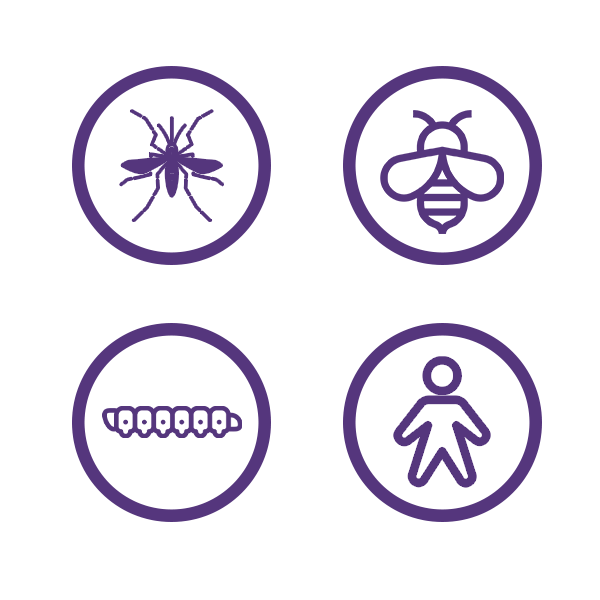
At DIOPT Arthropod Plus, A.) the landing page allows users to choose an input and output species from a menu of 13 species, then enter a list of genes from the input species. Filters facilitate searches at different levels of stringency. B.) Ortholog or paralog output tables provide a voting score, a list of algorithms that predict the pair, an indication if the score is the best score in both the forward and reverse directions, and an overall confidence score. C.) Pairwise protein alignment is provided for the longest protein isoforms, and includes summary statistics for amino acid similary and identity, and gaps in the alignment.
Functional domains are highlighted on the alignment and the identities over protein domain regions are also indicated.