DARG - Database of Alzheimer Related Genes in Model Organisms
The human genes related to Alzheimer’s disease and their orthologous genes in model organisms
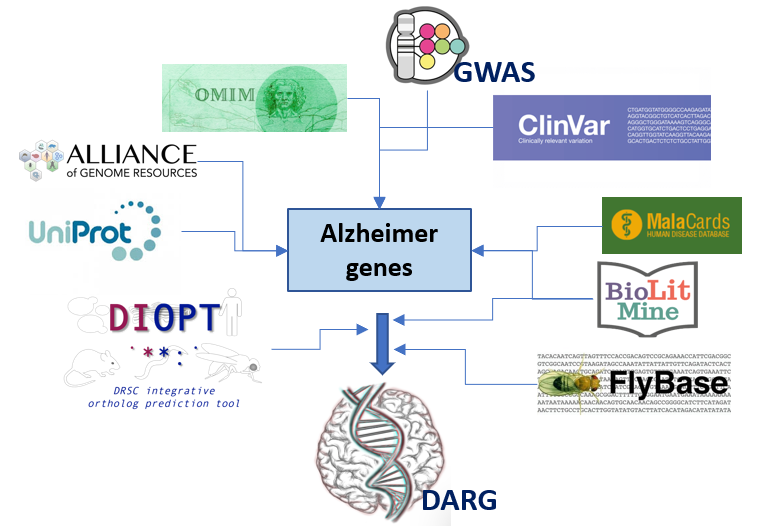
We collected Alzheimer associated genes from various public resources such as
OMIM, GWAS and ClinVar, and built a database for users to mine the list with
ease. There are 2700 protein-coding genes in total collected and we assigned the
confidence based on number of resource as well as the publication counts if the
gene is studies in two or more publications of Alzheimer focus. 388 (14%) are
assigned high rank while 870 (32%) are assigned moderate rank. Studying the
function of Alzheimer genes in animal models have proven to be important to
advance our understanding about the molecular mechanism of Alzheimer disease.
To facilitate such studies, we also mapped the human genes to the major model
organisms using DIOPT.
Alzheimer’s disease is a progressive brain disorder characterized by the gradual
decline of cognitive functions, particularly memory and reasoning abilities,
eventually interfering with a person’s ability to live independently. It is the
most common cause of dementia, typically appearing in people over 60, though
rare cases of early-onset Alzheimer’s can occur. First identified in 1906, the
disease begins by impairing memory and gradually affects language, reasoning,
and social behavior. Age is the greatest risk factor, but lifestyle factors
such as education level, cognitive activity, and head trauma also contribute.
While it has a significant impact, 99% of cases are not inherited..
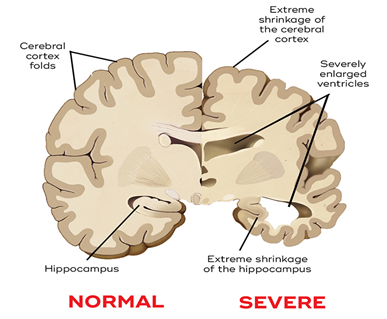
Alzheimer vs normal brain
The biology behind Alzheimer’s disease
The biological changes caused by Alzheimer’s are profound and disruptive. Clumps
of amyloid plaques and tangled fibers accumulate in the brain, leading to
inflammation and an inability to clear waste and toxins. Microglia cells, which
usually handle this maintenance, struggle to manage the buildup, resulting in
the gradual loss of neural connections. This disruption starts in the
hippocampus and entorhinal cortex- key areas for memory- before spreading to
other regions like the cerebral cortex. As neurons die, communication between
the brain, muscles, and organs deteriorates. Reduced blood flow compounds the
damage, depriving the brain of oxygen and causing it to shrink over time. These
changes highlight the intricate systems at play and the devastating effects
when they fail.
Epidemiology of Alzheimer’s disease
Alzheimer’s disease affects more than six million Americans aged 65 and older,
and its prevalence is increasing. Late-onset Alzheimer’s typically begins after
age 60, and life expectancy varies—3 to 4 years for older patients, and up to 10
years for those diagnosed younger. The disease places a heavy burden on
caregivers and family members, adding an emotional and social dimension to its
impact. While the majority of Alzheimer’s patients are White, African Americans
and Hispanics are statistically more likely to develop the disease. About 11% of
people over 65 are affected.
Treatment options for Alzheimer’s disease
Although there is no cure for Alzheimer’s, treatments are available to help
manage symptoms and slow progression. Medications like memantine and donepezil
regulate brain chemicals and are most effective in the early to mid-stages of
the disease. Additional treatments, such as antipsychotics, anti-anxiety drugs,
and sleep aids, address specific symptoms but don’t target the root cause. Side
effects can be a challenge, and the complexity of Alzheimer’s makes a single
cure unlikely. Research is ongoing, with a focus on improving quality of life
and finding more effective ways to manage the disease.